Page 2 of 3
Posted: Thu Jun 13, 2013 11:58 am
by noby
Weekend_Warrior wrote:The whole recording world understands that recording at higher sampling rates will give you greater dynamic range, and that the preferred option of mixing down from 24-bit to 16-bit (cd quality) is to use dither rather than simply cutting off those remaining 8-bits and throwing them away - "To hell with those, we didn't need them anyhow!"

But apparently, Noby knows something the rest of us do not... ?
Interesting. Twoism is a good place for this

Hm? I don't think I ever said dithering is useless if that's what you're implying

? Albeit it isn't absolutely necessary as the effects of
only] truncating are pretty much inaudible as well. Also sampling rates don't give you more dynamic range, you mean sampling depth I'm assuming, and essentially the only thing a higher depth gives you is a lower noise floor. 16-bits with proper dithering already provides a maximum of around -120dB which is well more than enough.
Posted: Thu Jun 13, 2013 12:04 pm
by noby
Weekend_Warrior wrote:Yup, this guy knows. As for eliminating a lot of the high-end frequencies. That's also true, but from my understanding those frequencies being eliminated won't be as noticable (if at all) because they are beyond the human range of hearing (20kHz+). You definitely lose the phatness of the low-end though. Even when using dither, like I mentioned before. This is almost common knowledge. I'm surprised Noby is arguing with us about this
And yet you've still provided no evidence for the claim. Should be pretty easy especially if it was common knowledge, no? Believe me I'm willing to be persuaded if you actually have some proper information about this. Reducing bit depth without dithering can and does cause some harmonic distortion affecting the timbre of the sound, but as said at 16 bits it's still inaudible.
Posted: Thu Jun 13, 2013 12:35 pm
by thepastinsidepressant
can you convert 24bit Flac to 24 bit Wav easy enough or is there loss?
Posted: Thu Jun 13, 2013 12:38 pm
by noby
thepastinsidepressant wrote:can you convert 24bit Flac to 24 bit Wav easy enough or is there loss?
There is none. Flac is a lossless compresion algorithm such as .zip or .rar, but optimized for audio. There is not much reason to do so though since the Flac will yield less space and it's extremely cheap for modern hardware to decode.
Posted: Thu Jun 13, 2013 4:46 pm
by Techboy
for the avoidance of any doubt, here is what you get when you mix the inverse of the 16 bit wave with the 24 bit wave:
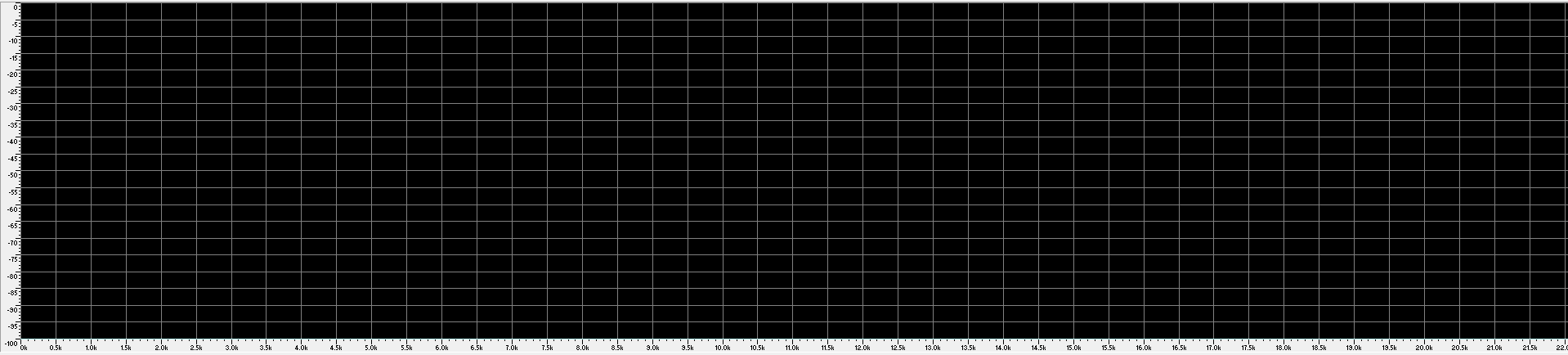
science!
Posted: Thu Jun 13, 2013 4:51 pm
by FernieCanto
Techboy wrote:for the avoidance of any doubt, here is what you get when you mix the inverse of the 16 bit wave with the 24 bit wave:
science!
Holy shit. What recordings did you use? The CD vs. 24bit WAV? Could it be possible that they simply sampled up from 16-bit to 24-bit to simply charge more? That would be deliciously evil.
Posted: Thu Jun 13, 2013 4:53 pm
by miklatov
Techboy wrote:for the avoidance of any doubt, here is what you get when you mix the inverse of the 16 bit wave with the 24 bit wave:
science!
That's awesome! Can't believe they hid the image of a thumb-print and a small fleck of old curry in the wave/inverse-wave overlay!
Oh wait....
Posted: Thu Jun 13, 2013 5:03 pm
by Techboy
Well Fernie people will always make outrageous claims such as they will repeat the process I performed, then try to maximise the waveform amplitude. Then they will see that after 85dB of boosting you get extremely loud white noise + a quiet version of the song and that is what they can hear. If that were true then it would actually sound terrible to their supersensitive hearing because they would also be able to hear the noise floor very loudly.
Posted: Thu Jun 13, 2013 6:13 pm
by noby
FernieCanto wrote:Holy shit. What recordings did you use? The CD vs. 24bit WAV? Could it be possible that they simply sampled up from 16-bit to 24-bit to simply charge more? That would be deliciously evil.
No but it demonstrates my point. The decibel scale on the image extends to about -100db which 16-bit audio covers perfectly. There most likely is some audio there, but it's around -120 - -140 decibels most likely.
Posted: Thu Jun 13, 2013 8:36 pm
by re-phaelam-ed
noby wrote:StarblazerUK wrote:The reason bass is lost when dithered down to 16bit is that 16bit doesn't have the headroom that 24bit recording does. Therefore, it gets rid of the majority of stuff in the ultra low end, as well as in the upper end fto shrink the filesize.
If you run the 24bit audio through a large PA system, you will soon hear/feel the difference and see it on the meter's/spectrum.
You're not making any sense. When you truncate, the whole spectrum is affected uniformly (with the exception of shaped dithering noise). It's as if you're mixing up lossy file compression into this matter.
realize that the 16bit will affect the response of the coils in your headphones and cones of your speakers in a different way. there may be no audible level of recognition in frequencies that the human ear can perceive, BUT there is a difference in which the sound is delivered. in turn CHANGING the way it is heard. the freqs may be out of our range, but response of our gear will vary enough to deliver a different experience. and THAT is audible.
you are also quite adept a regurgitating stuff you just read.
Posted: Sat Jun 15, 2013 1:11 pm
by Omnii
I was curious whether my 16-bit WAV files or 16-bit AIFF's ripped from the CD should have any difference in quality.
Posted: Sat Jun 15, 2013 1:39 pm
by noby
re-phaelam-ed wrote:realize that the 16bit will affect the response of the coils in your headphones and cones of your speakers in a different way. there may be no audible level of recognition in frequencies that the human ear can perceive, BUT there is a difference in which the sound is delivered. in turn CHANGING the way it is heard. the freqs may be out of our range, but response of our gear will vary enough to deliver a different experience. and THAT is audible.
you are also quite adept a regurgitating stuff you just read.
Typical audiophilia superstition. You should've just read the xiph article to avoid this whole argument because it refutes all of that. When you're talking about how signal affects your system's components you can't talk about bits anymore since the signal at that point is analog.
Posted: Sat Jun 15, 2013 4:53 pm
by FernieCanto
noby wrote:Typical audiophilia superstition. You should've just read the xiph article to avoid this whole argument because it refutes all of that. When you're talking about how signal affects your system's components you can't talk about bits anymore since the signal at that point is analog.
The thing is that, when you argue about sound quality, you can't use facts. Facts are boring. You're taking stuff from
books, you know? And that stuff doesn't work. The audiophile knows how things are, because he gets that feeling in his
gut. He
feels what's right. Books don't have guts.
Posted: Sat Jun 15, 2013 5:29 pm
by superuser
FernieCanto wrote:noby wrote:Typical audiophilia superstition. You should've just read the xiph article to avoid this whole argument because it refutes all of that. When you're talking about how signal affects your system's components you can't talk about bits anymore since the signal at that point is analog.
The thing is that, when you argue about sound quality, you can't use facts. Facts are boring. You're taking stuff from
books, you know? And that stuff doesn't work. The audiophile knows how things are, because he gets that feeling in his
gut. He
feels what's right. Books don't have guts.
My favorite part is how the audiophile guy said he used to use cheap earbuds before he heard his friends $1500 Grado headphones. Now, he hears the stunning depth of 24-bit WAVs compared to 16-bit WAVs.
Posted: Sat Jun 15, 2013 5:38 pm
by rd1994
Techboy wrote:for the avoidance of any doubt, here is what you get when you mix the inverse of the 16 bit wave with the 24 bit wave:
science!
I am stupid about science. Could someone explain please..I don't really get it
Posted: Sat Jun 15, 2013 5:48 pm
by miklatov
rd1994 wrote:Techboy wrote:for the avoidance of any doubt, here is what you get when you mix the inverse of the 16 bit wave with the 24 bit wave:
science!
I am stupid about science. Could someone explain please..I don't really get it
I believe the intended point is that there is no difference between the 16 bit wavs and 24 bit wavs, as if you overlay one with the inverse of the other (i.e. cancel out the bits that overlap), you end up with nothing at all.
Or have I got that wrong?
Incidentally, I'm not getting involved in this! I'll leave that to others, and I'll stick with enjoying my TH CD and getting over-involved in all the theories on the narrative/music that people have

Posted: Sat Jun 15, 2013 6:12 pm
by Amo Bishop Roden
Audiophile arguments are like masturbation; just a lot of self-righteous stroking resulting in nothing of value.
What have we learned here today? Who has had a change of heart?*
My advice would be for everyone here to put on their fancy big-boy headphones and go listen to the wonderful work of art that our favorite band has been working on for nearly a decade. Lossless is Lossless. Appreciate the music for what it is, but don't fetishize it.
Keep your boring science away from my art.
*Answer: Nobody
Posted: Sat Jun 15, 2013 7:39 pm
by Techboy
Hear hear!
Posted: Sat Jun 15, 2013 8:15 pm
by noby
FernieCanto wrote:The thing is that, when you argue about sound quality, you can't use facts. Facts are boring. You're taking stuff from books, you know? And that stuff doesn't work. The audiophile knows how things are, because he gets that feeling in his gut. He feels what's right. Books don't have guts.
I agree to an extent. Some thing
sounding better and something being
better quality are two different things. though. For an example when arguing about digital vs. analog or CD vs. vinyl I think personal preferences about which
sounds better are essential and completely valid, but claiming for an example that vinyl would have a better dynamic range or would resemble more the "original waveform" or something like that would be completely false and needs to be addressed. This is kind of a similar situation since it has already been established that you can't distinguish 16-bit audio from 24-bit under any normal circumstances. I'm of course willing to be swayed to another direction if someone actually does manage find some data that would refute what we know at the moment. Personal feelings and such are completely fine as long as they aren't presented as facts, which I felt did happen originally.
miklatov wrote:I believe the intended point is that there is no difference between the 16 bit wavs and 24 bit wavs, as if you overlay one with the inverse of the other (i.e. cancel out the bits that overlap), you end up with nothing at all.
Or have I got that wrong?
Essentially yes, it's formally called a
null test. The picture shows there are no audible frequencies in the difference between the 16-bit and 24-bit versions.
Amo Bishop Roden wrote:What have we learned here today? Who has had a change of heart?*
My advice would be for everyone here to put on their fancy big-boy headphones and go listen to the wonderful work of art that our favorite band has been working on for nearly a decade. Lossless is Lossless. Appreciate the music for what it is, but don't fetishize it.
Keep your boring science away from my art.
*Answer: Nobody
I agree. Apologies on my part, these discussions are something I have a tendency to get involved in a bit too emotionally...
Posted: Sat Jun 15, 2013 8:29 pm
by re-phaelam-ed
noby wrote:re-phaelam-ed wrote:realize that the 16bit will affect the response of the coils in your headphones and cones of your speakers in a different way. there may be no audible level of recognition in frequencies that the human ear can perceive, BUT there is a difference in which the sound is delivered. in turn CHANGING the way it is heard. the freqs may be out of our range, but response of our gear will vary enough to deliver a different experience. and THAT is audible.
you are also quite adept a regurgitating stuff you just read.
Typical audiophilia superstition. You should've just read the xiph article to avoid this whole argument because it refutes all of that. When you're talking about how signal affects your system's components you can't talk about bits anymore since the signal at that point is analog.
scrub through a an 8bit recording...then scrub through a 16bit and 24bit recording.
the fewer artifacts the better. glass vs sandpaper.